Beirut, Lebanon
A resilient Mediterranean capital of food, nightlife and layered history.
Beirut is one of the standout places to visit in Lebanon. A resilient Mediterranean capital of food, nightlife and layered history. Plan on 3-4 days. Fly into Beirut-Rafic Hariri International (BEY), which is about 10 km from the centre. The best months are April, May, September, and October. A mid-range budget is around $150 per person per day (from about $70 on a tight budget to $350+ for luxury).
Government travel advice: Do not travel. US State Department level 4, Government of Canada level 4, UK FCDO level 2. Read the official advice before you plan.
About Beirut
Beirut mixes Ottoman, French Mandate and modern architecture along the Mediterranean, with a lively cafe, art and food scene. Neighbourhoods such as Gemmayzeh, Mar Mikhael and Hamra each have their own character. Lebanon has faced severe economic crisis, the 2020 port explosion and security tensions; travel advice should be checked carefully.
Key facts
- Country: Lebanon
- Ideal stay: 3-4 days
- Best time: April-June and September-November: warm and comfortable. Winter is rainy; July-August is hot and humid.
- Currency: Lebanese pound (LBP); US dollars widely used
- Language: Arabic · French and English widely spoken
- Time zone: Asia/Beirut (UTC+2/+3)
- Power plugs: Type C/D/G · 230 V
- Entry requirements: Many nationalities get a visa on arrival; rules vary. Check official Lebanese sources for your passport.
How to get to Beirut
- Fly into Beirut-Rafic Hariri (BEY).
- Taxi or ride-hailing to your neighbourhood.
- Hire a driver for day trips; public transport is informal.
Airports
BEY: Beirut-Rafic Hariri International, 10 km from Beirut. Only international airport, close to the city. Getting from the airport: Taxi / ride-hailing (15-30 min, ~$15-30).
Getting around
Public transport is informal (vans and buses). Taxis, ride-hailing and drivers are more convenient. Power cuts are common, so many places run generators.
Best time to go
The best months to visit Beirut are April, May, September, and October. March, June, July, August, and November are also a good choice. Daytime highs average about 31°C in August and 17°C in January. Expect very wet in January, February, and December. April-June and September-November: warm and comfortable. Winter is rainy; July-August is hot and humid.
Top things to do in Beirut
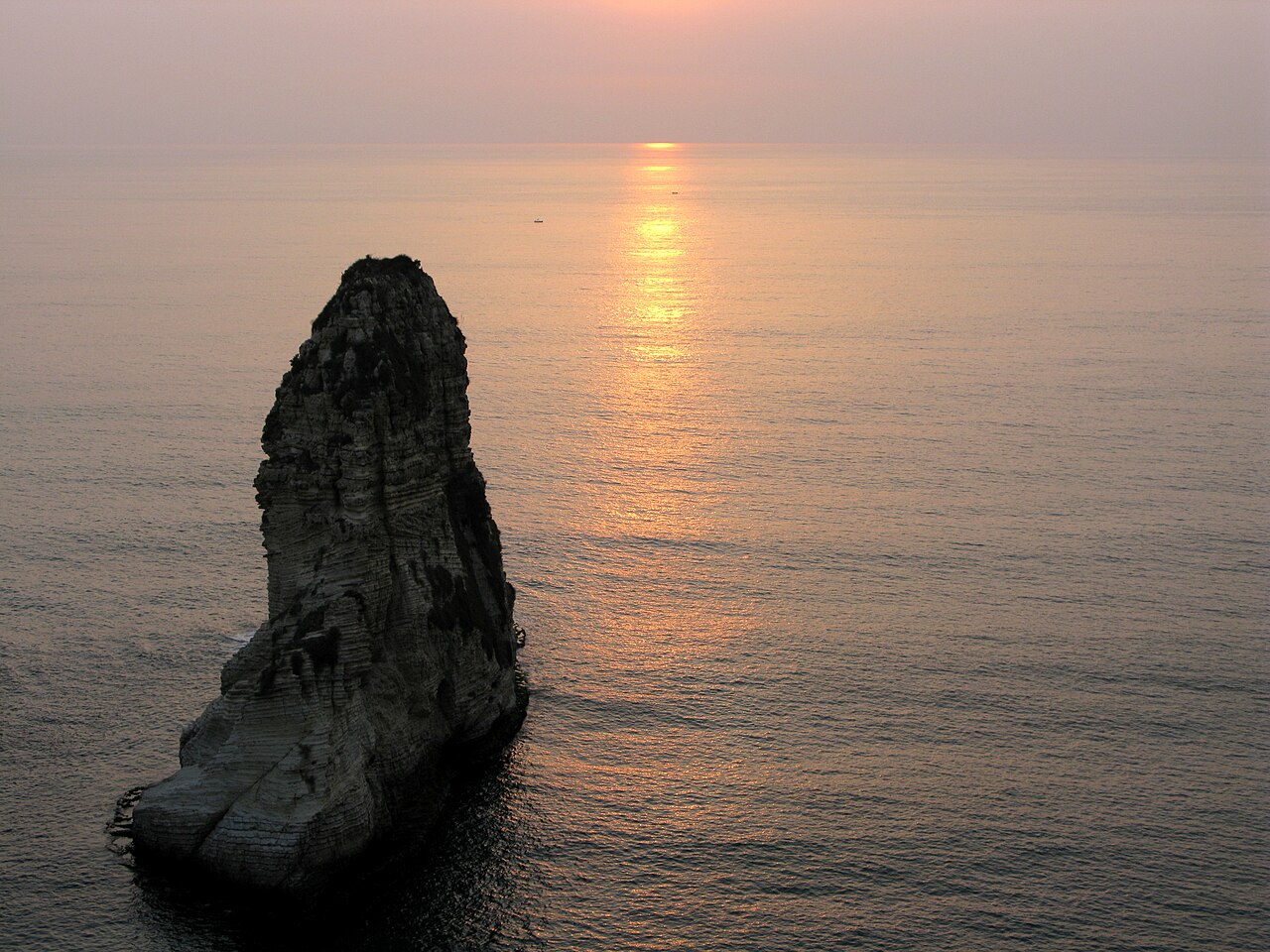
- Raouche Rocks and Corniche (1-2 h, Free): Sea stacks on the western coast and a popular waterfront promenade.
- National Museum of Beirut (1.5-2 h, ~$5-10): Archaeological museum with Phoenician and Roman artefacts.
- Mohammad Al-Amin Mosque and Martyrs Square (1 h, Free): Blue-domed mosque beside Roman ruins in the downtown district.
- Mar Mikhael and Gemmayzeh (Evening, Varies): Restaurant, bar and gallery districts with historic houses.
- Jeita Grotto day trip (Half day, ~$20-30): Limestone caves north of Beirut (about 20 km); check opening status and seasonal closures.
- Byblos day trip (Half day, ~$5-10): One of the oldest continuously inhabited cities, with a crusader castle and harbour (about 40 km north).
Where to stay
- Gemmayzeh / Mar Mikhael: Restaurants, bars and character houses.
- Hamra: University area, cafes and central location.
- Downtown / Saifi: Close to the main sights and the waterfront.
What to eat and drink
- Mezze: Hummus, tabbouleh, kibbeh, fattoush and more.
- Manakish: Flatbread with za-atar or cheese, a breakfast favourite.
- Kibbeh nayyeh: Raw minced meat and bulgur, a Lebanese specialty.
Travel tips for Beirut
- Carry some US dollars and cash for small purchases.
- Check security and political news before moving around.
- Hire a driver for day trips.
- Dress comfortably; Beirut is relatively liberal.
Good to know
- Check current government travel advisories before travelling. Security risks exist, especially in southern Lebanon, the Bekaa Valley and near the Syrian border.
- Electricity and fuel shortages and banking restrictions can affect travel; bring cash.
Daily budget
Budget travellers can get by on about $70 per day, mid-range travellers should plan for around $150, and luxury travel starts around $350 per person per day, excluding flights.
More places like Beirut
- Manama, Bahrain: An island capital where 4,000-year-old forts sit beside financial towers.
- Jerusalem, Israel: A walled Old City sacred to three faiths, layered with 3,000 years of history.
- Bethlehem, Palestine: The traditional birthplace of Jesus, a hilltop town of churches and old stone lanes.
- Doha, Qatar: A skyline of museums and towers where dhows meet desert dunes.
- Kuwait City, Kuwait: A Gulf capital of seafront towers, bazaars and rich museum collections.
- Damascus, Syria: One of the oldest continuously inhabited cities, with a famed Old City and Umayyad Mosque.
Prices, times and entry rules are approximate guides. Confirm them with official sources before you book.