Ashgabat, Turkmenistan
A white-marble capital of monuments, gateway to the burning Darvaza gas crater.
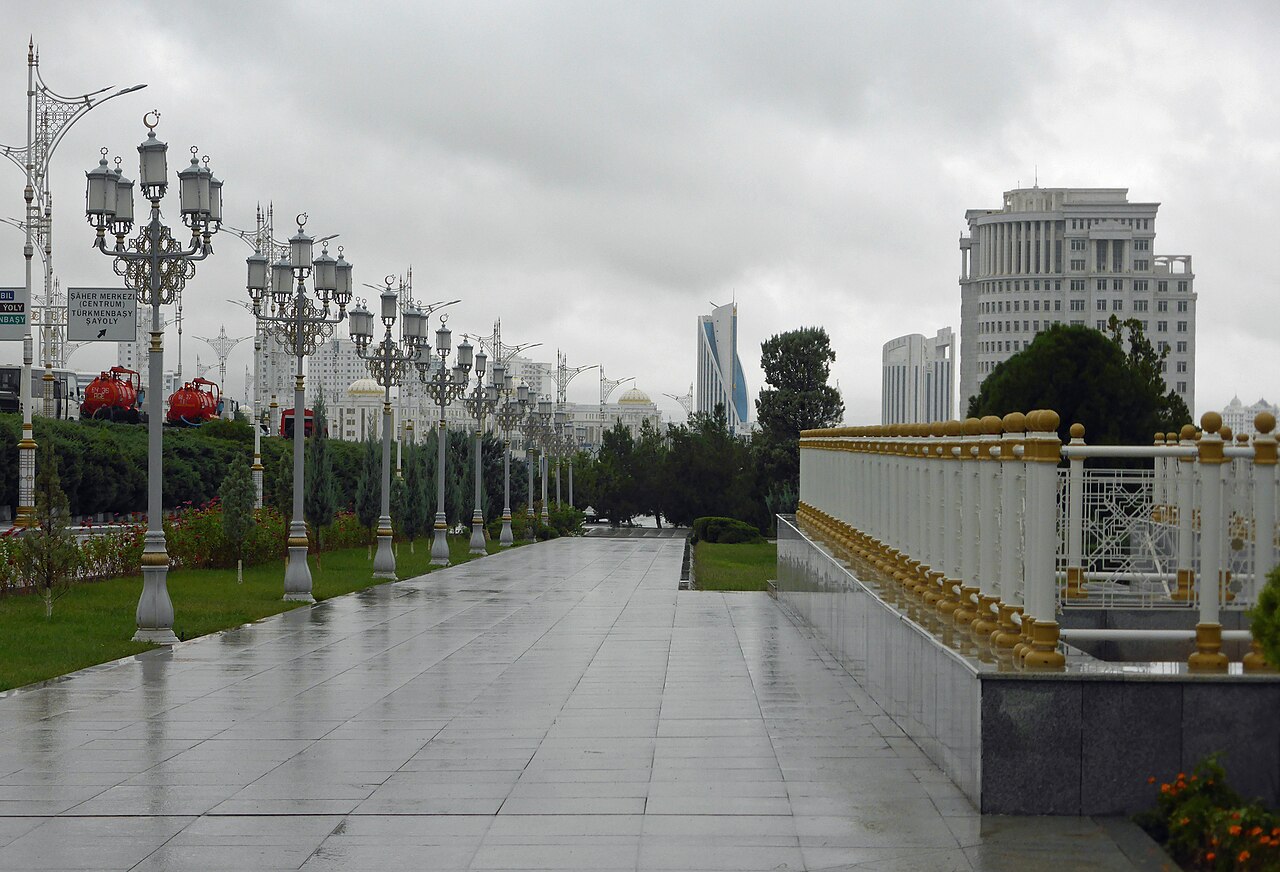
Ashgabat is one of the standout places to visit in Turkmenistan. A white-marble capital of monuments, gateway to the burning Darvaza gas crater. Plan on 3-5 days. Fly into Ashgabat International (ASB), which is about 10 km from the centre. The best months are April, May, October, and November. A mid-range budget is around $140 per person per day (from about $70 on a tight budget to $280+ for luxury).
Government travel advice: Exercise increased caution. US State Department level 1, Government of Canada level 2, UK FCDO level 1. Read the official advice before you plan.
About Ashgabat
Ashgabat is known for white-marble buildings, gilded monuments and wide boulevards in a landscape of desert and the Kopet Dag mountains. Nearby sights include the Nisa fortress, an old Parthian site, the Sunday Tolkuchka Bazaar and the Darvaza gas crater in the Karakum desert. Travel is tightly controlled and restrictions on photography and movement apply.
Key facts
- Country: Turkmenistan
- Ideal stay: 3-5 days
- Best time: April-May and September-October. Summers are extremely hot.
- Currency: Turkmenistani manat (TMT)
- Language: Turkmen, Russian · very limited English
- Time zone: Asia/Ashgabat (UTC+5)
- Power plugs: Type B/C/F · 220 V
- Entry requirements: Tourist visas generally require a letter of invitation and guided travel arranged through an approved agency. Check official sources.
How to get to Ashgabat
- Arrange a visa invitation via an approved agency.
- Fly into Ashgabat (ASB).
- Join a guided tour for city sights and Darvaza.
Airports
ASB: Ashgabat International, 10 km from Ashgabat. Modern terminal near the city centre. Getting from the airport: Taxi / arranged transfer (15-25 min, ~$10-20).
Getting around
Taxis are cheap; guided tours handle permits and restricted areas.
Best time to go
The best months to visit Ashgabat are April, May, October, and November. March and September are also a good choice. July and August are usually best avoided because of the weather or crowds. Daytime highs average about 39°C in July and 8°C in January. Expect frequent rain in March and April. April-May and September-October. Summers are extremely hot.
Top things to do in Ashgabat
- Independence Monument and Neutrality Arch area (1-2 h, Free): Large monuments with gold statues in landscaped parks; follow signs about photography.
- Turkmenbashi Ruhy Mosque (Gypjak) (1.5 h, Free-low): Large marble mosque about 15 km from the city, with the founder mausoleum.
- Nisa Fortress (1-2 h, ~$5-15): UNESCO-listed ruins of an early Parthian royal settlement.
- National Museum of History (1.5 h, ~$5-15): Large museum with artefacts from ancient and Silk Road eras.
- Tolkuchka Bazaar (2 h, Free): Sunday market with carpets, camels and crafts; check current status and location.
- Darvaza gas crater (1-2 days, ~$150-300 tour): Burning crater in the Karakum Desert, around 260 km north; visited on an overnight tour with camping.
Where to stay
- City centre: Large hotels near monuments and museums.
- Near the Kopet Dag: Quieter edge with views of the mountains.
- Darvaza camp: Tent camps by the crater for overnight stays.
What to eat and drink
- Plov: Rice with lamb and carrots.
- Manty: Steamed dumplings with meat.
- Chal: Fermented camel milk drink.
Travel tips for Ashgabat
- Book with a licensed agency and allow time for visa processing.
- Keep your passport on you; carry cash.
- Ask before photographing government buildings.
- Bring layers for desert nights.
Good to know
- Photography of government, military and some public buildings is restricted.
- Internet access, banking and freedoms are limited; expect strict controls.
Daily budget
Budget travellers can get by on about $70 per day, mid-range travellers should plan for around $140, and luxury travel starts around $280 per person per day, excluding flights.
More places like Ashgabat
- Samarkand, Uzbekistan: A Silk Road jewel of turquoise domes and the grand Registan.
- Baku, Azerbaijan: A Caspian-shore capital where a walled medieval core meets glass towers.
- Agra, India: Home of the Taj Mahal and the Mughal heart of northern India.
- Beijing, China: Imperial palaces, hutong alleys and the Great Wall within a day trip of a 21-million-person capital.
- Ulaanbaatar and Terelj, Mongolia: A raw capital on the edge of the endless steppe, with ger camps, horses and Genghis Khan.
- Seoul, South Korea: Palaces, street markets, K-culture and mountain trails in one dynamic megacity.
Prices, times and entry rules are approximate guides. Confirm them with official sources before you book.