Marrakech, Morocco
Souks, riads and the Atlas Mountains on the horizon.
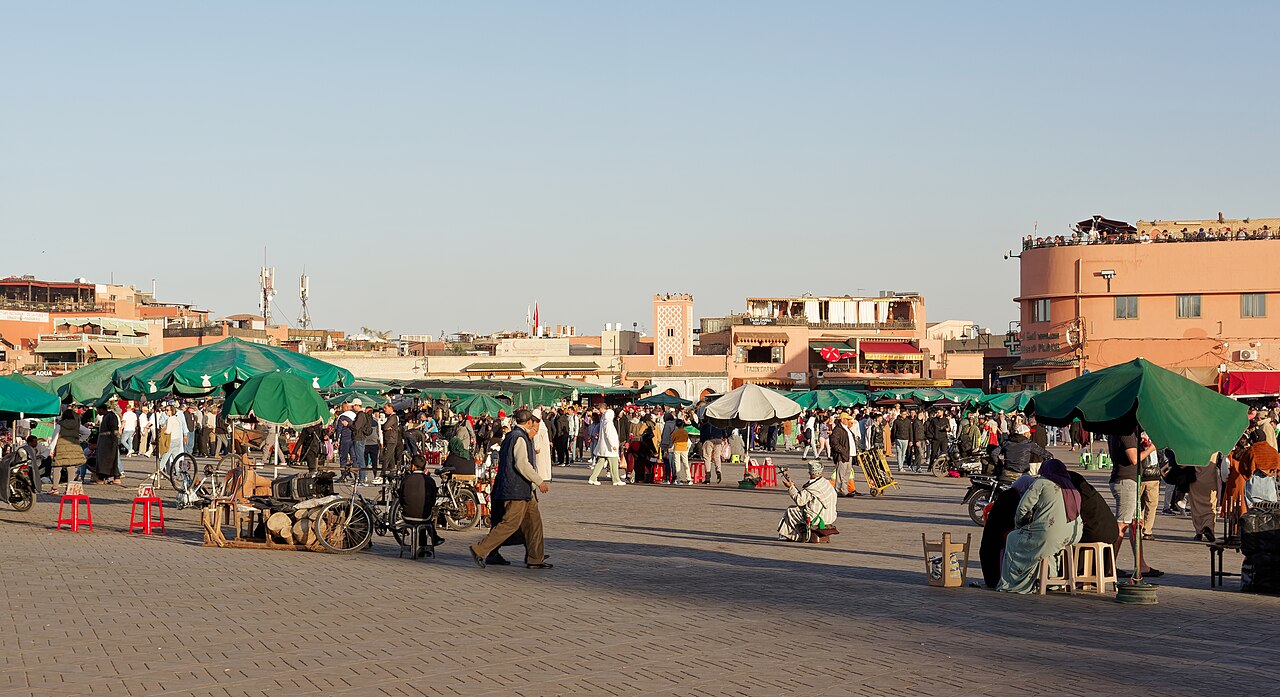
Marrakech is one of the standout places to visit in Morocco. Souks, riads and the Atlas Mountains on the horizon. Plan on 3–5 days. Fly into Marrakech Menara (RAK), which is about 6 km from the centre. The best months are March, April, September, October, and November. A mid-range budget is around $130 per person per day (from about $55 on a tight budget to $330+ for luxury).
Government travel advice: Exercise increased caution. US State Department level 2, Government of Canada level 2, UK FCDO level 1. Read the official advice before you plan.
About Marrakech
Founded in 1070, Marrakech’s walled medina is a UNESCO site of labyrinthine alleys, tanneries, madrasas and riad courtyards. The Jemaa el-Fnaa square turns into an open-air food market and performance stage each night. The High Atlas and Atlantic beaches are day trips away.
Key facts
- Country: Morocco
- Ideal stay: 3–5 days
- Best time: March–May and September–November. Summers exceed 38 °C; winter days are mild but nights are cold.
- Currency: Moroccan dirham (MAD)
- Language: Arabic · Amazigh · French · English in tourism
- Time zone: Africa/Casablanca (UTC+1)
- Power plugs: Type C/E · 220 V
- Entry requirements: Many nationalities are visa-free for up to 90 days. Check requirements.
How to get to Marrakech
- Fly into Marrakech Menara (RAK).
- Arrange riad pickup: medina alleys can’t be reached by car.
- Trains from Casablanca (CMN) take 3 h to Marrakech.
Airports
RAK: Marrakech Menara, 6 km from Marrakech. Very close; direct flights from many European cities. Getting from the airport: Taxi (15–25 min, $10–15); Bus 19 (30 min, ~$3).
Getting around
The medina is best on foot. Petits taxis are metered for short rides. Use a licensed guide for the first half-day.
Best time to go
The best months to visit Marrakech are March, April, September, October, and November. January, February, May, and December are also a good choice. June, July, and August are usually best avoided because of the weather or crowds. Daytime highs average about 38°C in July and 18°C in January. March–May and September–November. Summers exceed 38 °C; winter days are mild but nights are cold.
Top things to do in Marrakech
- Jemaa el-Fnaa & the souks (3 h, Free): Storytellers, musicians and food stalls at night. Haggle gently in the souks.
- Majorelle Garden (1.5 h, ~$15–20): Cobalt-blue villa and cactus garden created by Jacques Majorelle, later owned by Yves Saint Laurent.
- Bahia Palace (1 h, ~$7): 19th-century palace of carved cedar and zellige tile.
- Hammam spa (1–2 h, ~$20–70): Traditional steam bath and scrub. Choose a reputable spa for first time.
- Ourika Valley & Atlas Mountains (Full day, ~$40–80 tour): Waterfalls and Berber villages 1 h south of the city.
- Agafay desert camp (Evening, ~$60–120): Stone desert with sunset camel ride and dinner 40 minutes away.
Where to stay
- Medina riad: Authentic and atmospheric. Request pick-up from the nearest gate.
- Gueliz: Modern French-built quarter with cafes and art galleries.
- Palmeraie: Resorts and villas among palm trees.
What to eat and drink
- Tagine: Slow-cooked stew; try lamb with prunes.
- Pastilla: Sweet-savoury pigeon or chicken pie.
- Mint tea: Offered everywhere as hospitality.
Travel tips for Marrakech
- Dress modestly.
- Agree prices before you accept guides, rides or henna.
- Carry small notes for tips.
- Drink bottled water.
Good to know
- Persistent touts: a polite “la, shukran” is enough.
- Never accept food gifts from strangers.
Daily budget
Budget travellers can get by on about $55 per day, mid-range travellers should plan for around $130, and luxury travel starts around $330 per person per day, excluding flights.
More places like Marrakech
- Cairo & Giza, Egypt: The last surviving wonder of the ancient world, beside one of the biggest cities in Africa.
- Tunis & Carthage, Tunisia: A walled medina, Roman ruins by the sea and a blue-and-white clifftop village.
- Lalibela, Ethiopia: Eleven medieval churches carved down into solid rock, still used for worship today.
- Algiers, Algeria: A white city stacked above the Mediterranean, with a historic Casbah and Roman ruins nearby.
- Leptis Magna, Libya: One of the best-preserved Roman cities on the Mediterranean, in a country where travel is highly restricted.
- Meroe Pyramids, Sudan: Steep Kushite pyramids in the Nubian desert, in a country now ravaged by war.
Prices, times and entry rules are approximate guides. Confirm them with official sources before you book.