Krakow, Poland
Poland's former royal capital: a vast medieval square, Wawel Castle and sobering history nearby.
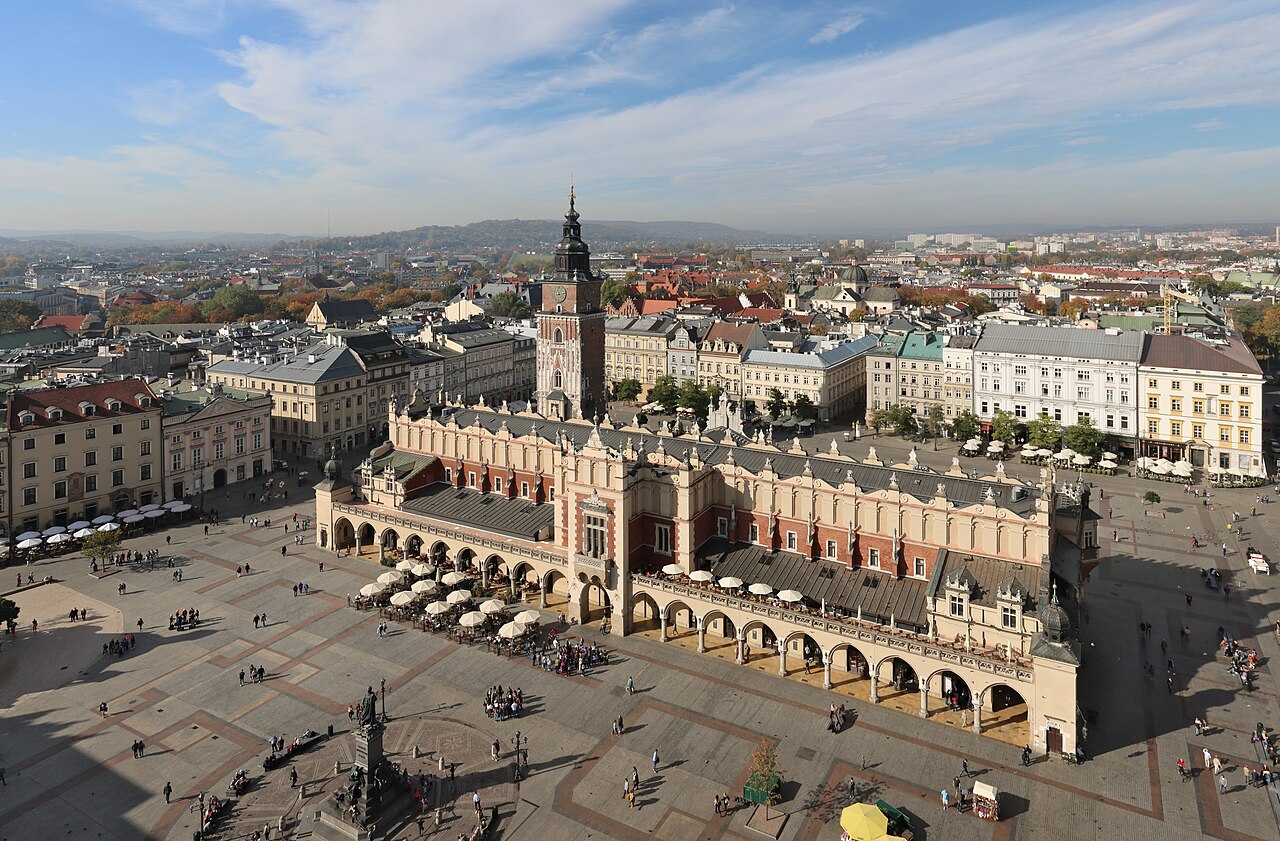
Krakow is one of the standout places to visit in Poland. Poland's former royal capital: a vast medieval square, Wawel Castle and sobering history nearby. Plan on 3-4 days. Fly into John Paul II Krakow-Balice (KRK), which is about 14 km from the centre. The best months are May, June, and September. A mid-range budget is around $105 per person per day (from about $50 on a tight budget to $230+ for luxury).
About Krakow
Krakow's Old Town is centred on Main Market Square, one of Europe's largest medieval squares, and Wawel Hill rises above the Vistula. The Kazimierz quarter was the historic Jewish district, now full of cafes. The Auschwitz-Birkenau Memorial and the Wieliczka Salt Mine are the major excursions.
Key facts
- Country: Poland
- Ideal stay: 3-4 days
- Best time: May-June and September for pleasant weather and fewer crowds; December for markets. July-August is busy and hot.
- Currency: Polish zloty (PLN)
- Language: Polish · English widely spoken among younger people
- Time zone: Europe/Warsaw (UTC+1/+2)
- Power plugs: Type C/E · 230 V
- Entry requirements: Schengen rules apply. Many nationalities are visa-free for 90 days; check official sources for your passport.
How to get to Krakow
- Fly into Krakow (KRK).
- Take the airport train to the main station beside the Old Town.
- Book Auschwitz and Wieliczka online in advance.
Airports
KRK: John Paul II Krakow-Balice, 14 km from Krakow. Wide European network. Getting from the airport: Train to Krakow Glowny (20 min, ~$3); Taxi / ride-hail (25 min, ~$12-20).
Getting around
Old Town and Kazimierz are walkable. Trams and buses cover the rest. Ride-hail apps are cheap.
Best time to go
The best months to visit Krakow are May, June, and September. April, July, August, October, and December are also a good choice. January is usually best avoided because of the weather or crowds. Daytime highs average about 25°C in July and 1°C in January. Expect very wet in July. May-June and September for pleasant weather and fewer crowds; December for markets. July-August is busy and hot.
Top things to do in Krakow
- Main Market Square and Cloth Hall (2-3 h, Free; basilica ~$5): The vast square, St Mary's Basilica with its altarpiece, and trumpeter call every hour.
- Wawel Castle and Cathedral (2-3 h, ~$10-25): Royal castle complex on a hill; buy tickets for the parts you want.
- Kazimierz (2 h, Free): Former Jewish quarter with synagogues, courtyards and bars.
- Wieliczka Salt Mine (3-4 h, ~$30-40): UNESCO-listed mine with chapels carved from salt, about 14 km away.
- Auschwitz-Birkenau Memorial (4-6 h, Free entry with timed pass; tours ~$20-40): Former Nazi camp; a deeply sobering visit. Book in advance and consider a guided tour.
- Schindler's Factory museum (2 h, ~$10-14): Museum about Krakow under occupation.
Where to stay
- Old Town: Central, pretty and busy.
- Kazimierz: Atmospheric, nightlife and cafes.
- Podgorze: Quieter and cheaper across the river.
What to eat and drink
- Pierogi: Stuffed dumplings with cheese, meat or cabbage.
- Zapiekanka: Open-faced baguette pizza from Plac Nowy.
- Obwarzanek: Braided bread ring sold from street carts.
Travel tips for Krakow
- Book Auschwitz tickets early, especially in summer.
- Eat at milk bars for cheap traditional food.
- Use ride-hail apps instead of street taxis.
- Carry some zloty; many places take cards.
Good to know
- Taxi overcharging near the square; pre-book or use apps.
- Auschwitz requires respectful behaviour; photos are limited in places.
Daily budget
Budget travellers can get by on about $50 per day, mid-range travellers should plan for around $105, and luxury travel starts around $230 per person per day, excluding flights.
More places like Krakow
- Sarajevo, Bosnia and Herzegovina: Where East meets West: Ottoman bazaars, Austro-Hungarian boulevards and a moving modern history.
- Riga, Latvia: The Baltic capital of Art Nouveau facades, a lively old town and a big market.
- Vilnius, Lithuania: A baroque old town with a bohemian republic, hot-air balloons and a deep layered history.
- Prague, Czechia: A fairy-tale city of spires, a hilltop castle and the Charles Bridge.
- Tirana, Albania: A colourful, fast-changing capital with Ottoman mosques, communist bunkers and mountain access.
- Lviv, Ukraine: A Habsburg-era cultural capital of coffee houses and cobbled squares in western Ukraine.
Prices, times and entry rules are approximate guides. Confirm them with official sources before you book.